Chapter 5: Christine Mayr-Lumetzberger
A Roman Catholic Bishop in Austria
Supported by The National Geographic Society
Christine Mayr-Lumetzberger is a Roman Catholic Bishop and Priest from Austria. She is part of the Danube Seven, a group of seven women who were ordained priests on a ship cruising the Danube river on 29 June 2002 by Rómulo Antonio Braschi, Ferdinand Regelsberger, and a third unknown bishop.
A year later, she was ordained as a Bishop along with another woman. Since then, they started a succession and a movement of more than 250 women who live in Europe, Africa, and the United States, who have been ordained by Women Priests and Bishops. All of them received the training and are effectively performing marriages, baptizing babies, and assisting and accompanying their communities. However, they have been automatically excommunicated by the Roman Catholic Church for not being a man.
Since Mayr-Lumetzberger was a little girl she felt that her call was to be a priest. She was fascinated by her grandfather's work as a sacristan and the management of "sacred things". By the time she served as a Benedictine nun in her 20s, she wasn't allowed to formulate any wish for a spiritual leadership position, as she was subservient to men.
However, as she grew old, she started to get closer to her call, and she is now one of the founders of the Women Priests Movement. She is challenging and transforming the notions of the traditional church, offering an approachable and human view of an institution that many people feel distant and distrustful about. Despite the difficulties she encountered in the more traditional spheres in her country and abroad, she built a community in Austria that supports and celebrates her.
Christine Mayr-Lumetzberger after a service in St. Leonhard Church in the municipality of Pucking, Upper Austria.
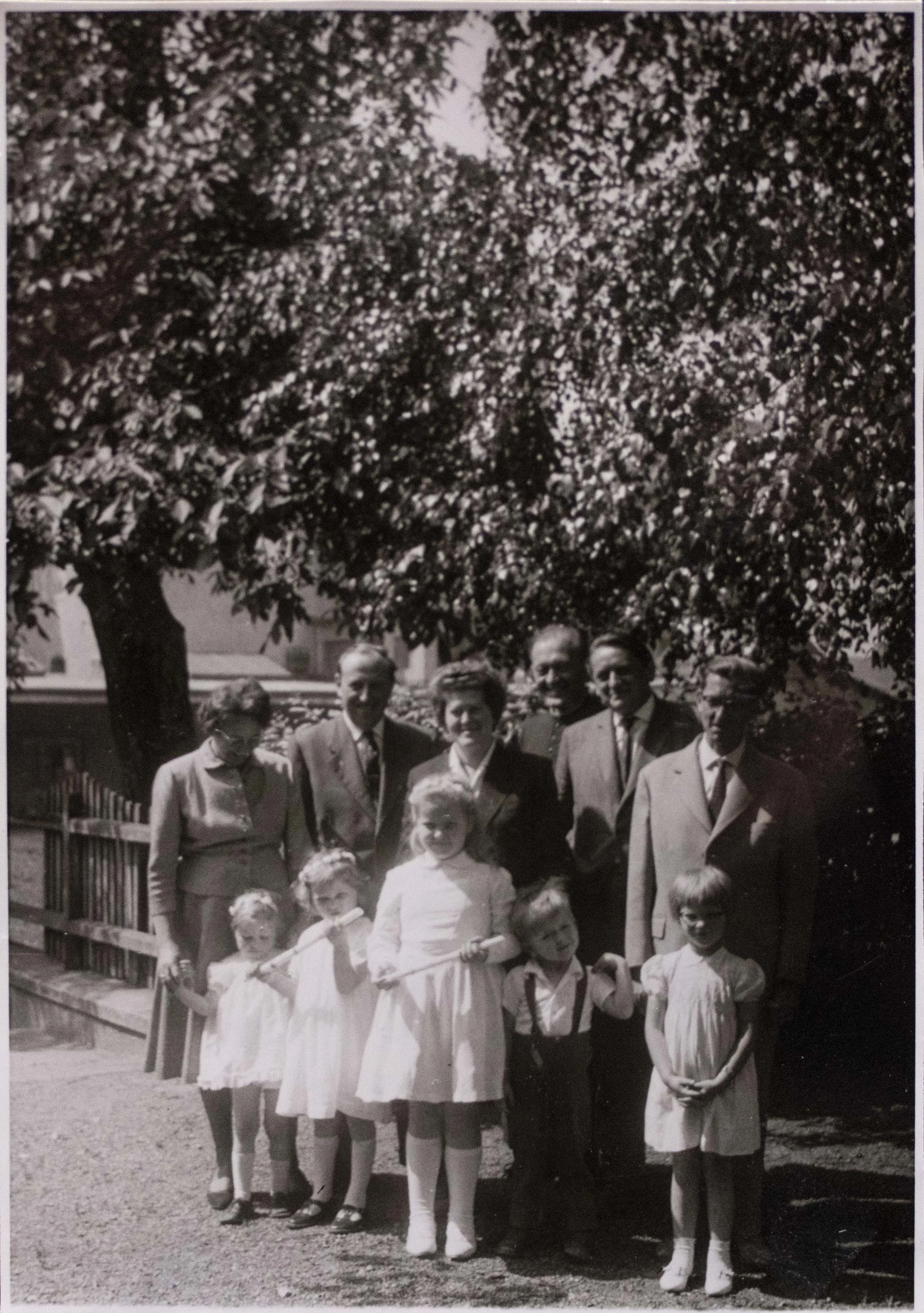
I am the eldest daughter of religious parents (second starting from left), born in 1956 in Linz, Upper Austria. Both were in their 30s when they married and had "moral" ideals. I was particularly interested in my grandfather's work as a sacristan, the natural handling of "sacred things". I had neither fear nor respect for priests, I either didn't care about them or I expected information about God and what is connected with it. What irritated me was the rural piety of my paternal grandmother, who I didn't really like.
Once, when I was a very young child, I saw a picture of a young sister or prime minister in the church newspaper. I showed it to my mother and said it would be best if the brothers became priests and my sister and me nuns - priesthood was out of the question for girls. She found the thought rather repellent, which I, in turn, found completely incomprehensible. The spiritual position was the pinnacle of all dreams!
I spent my entire school days - 14 long years - in the school of the Sisters of the Cross in Linz. Religious instruction and the life and role models of my teachers and some of the sisters were alien to me. It seemed impossible to me how the fascinating biblical message was misunderstood by them. My children's Bible and later also my religious instruction spoke a completely different language. The honest, personal struggle for a real-life convinced me more.
After graduating from school I entered the convent of the Benedictine Sisters of the Immaculate Heart of Mary as a nun. I received the sister's name "Marie Christin" and chose the "Holy Trinity" as a title of nobility. I hoped to be at the goal of my spiritual desires.
God is everywhere, like in a merchant who sells all his pearls to find the tiny and precious one.
Matthew 13:45-46
45 “Again, the kingdom of heaven is like a merchant looking for fine pearls.46 When he found one of great value, he went away and sold everything he had and bought it.
I was not allowed to formulate my wish for the priesthood, especially when I was in a monastery, because the role of women as servants was clearly defined.
I took the religious education at face value, did my table service, endured the lessons of the mistress of novices and a stupid spiritual leader, cleaned the chapel, learned to do double knee bends in a choir robe with censer, boat, and veil, and loved and enjoyed the hours of choir prayer. I considered monastic life an indispensable preliminary step on my way to the altar.
The tasks of the sisters towards sole leadership of the parish seemed interesting to me. After postulancy, two years of novitiate and profession, I wanted to study theology in Salzburg. With the reference to obedience, I had to go to the academy in Linz to become a religion teacher. The training was good, but not what I wanted. There were conflicts with my superiors and some experiences that made me start my search for God again. The search for God is the real question for someone who knocks on the gate of a Benedictine monastery to enter.
After almost 5 years, I left the monastery at the end of my profession, with a heavy heart, again not having found what I was looking for, richly gifted with spiritual achievements. Inwardly I have remained a Benedictine, even though I have taken off my outer habit. The profession with a serious orientation towards God still applies to me.
In my senior year, I taught religion in a special school, became acquainted with my husband Michael, fell in love with him, moved in with him, and married him after graduation. I was immediately deprived of my missio canonica. In addition to this difficult situation, church people distanced themselves, and I had conflicts with the institution. I faced a total lack of understanding from the Catholic environment. My marriage was definitely also an intentional act of solidarity with a man who, in the eyes of the church, was a failure. Where was the Christian solidarity with me?
I slowly started to work in the church again, and a new pastor didn't make things any easier. I started - again on a voluntary basis - to work in hospital pastoral care. I was able to do my work, was accepted by the patients, and got my strength from work. At the same time, I wished more and more loudly to become a pastor of a specific small church. Since that time it has also been clear to me that priest and pastor is actually my ultimate career aspiration. I can and I want that.
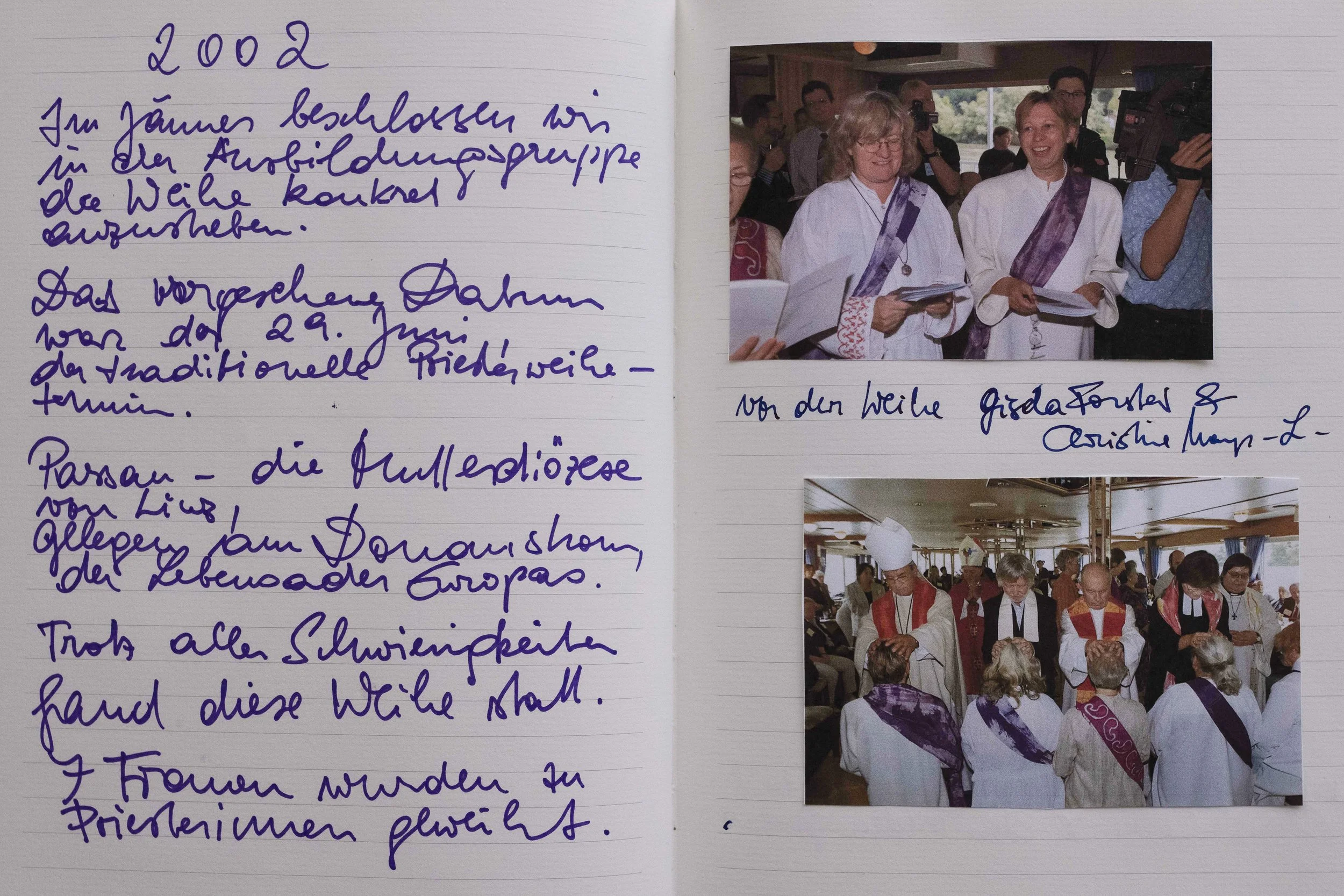
In 2002, Christine Mayr-Lumetzberger, along with other six women, were ordained as Roman Catholic Priests in the Danube, and they are known as the Danube Seven. Since then, they started a succession of other 250 women.
The Vatican's Congregation for the Doctrine of the Faith issued and published on May 29, 2008, in the Vatican newspaper L'Osservatore Romano, a decree signed by Cardinal William Levadadetermining that women "priests" and the bishops who attempt to ordain them would incur ex-communication latæ sententiæ. Ex-communication can be committed for some sins, and only in eight cases is the ex-communication is latæ sententiæ. However, pedophilia or other abuses of power within the church aren't a reason for it.
It was mainly because of the menstrual blood and the taboo attached to it that women were seen as unclean and therefore were excluded and banned to access positions of authority within Christianity. The Corpus Iuris Canonici (1234-1916) forbade communion for women who were in their periods.
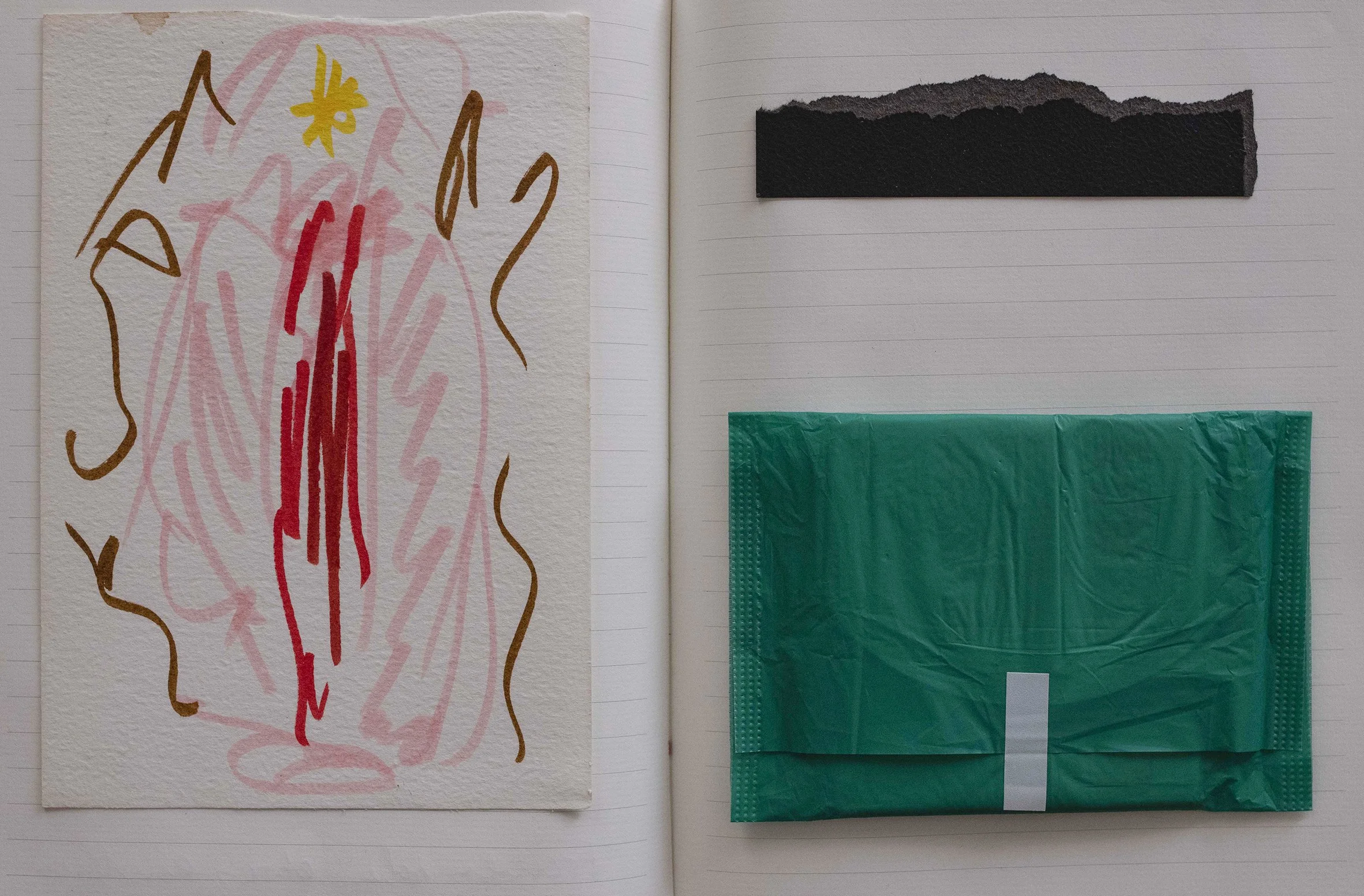
«A baptized male alone receives sacred ordination validly»
Canon Law 1024
I don't want to stand at the altar as an ancient woman and preach about a church that administers the testament of Jesus to people who are already completely alien and uninteresting in the gospel. I would like to tell about a Jesus whom the children got to know from their parents.
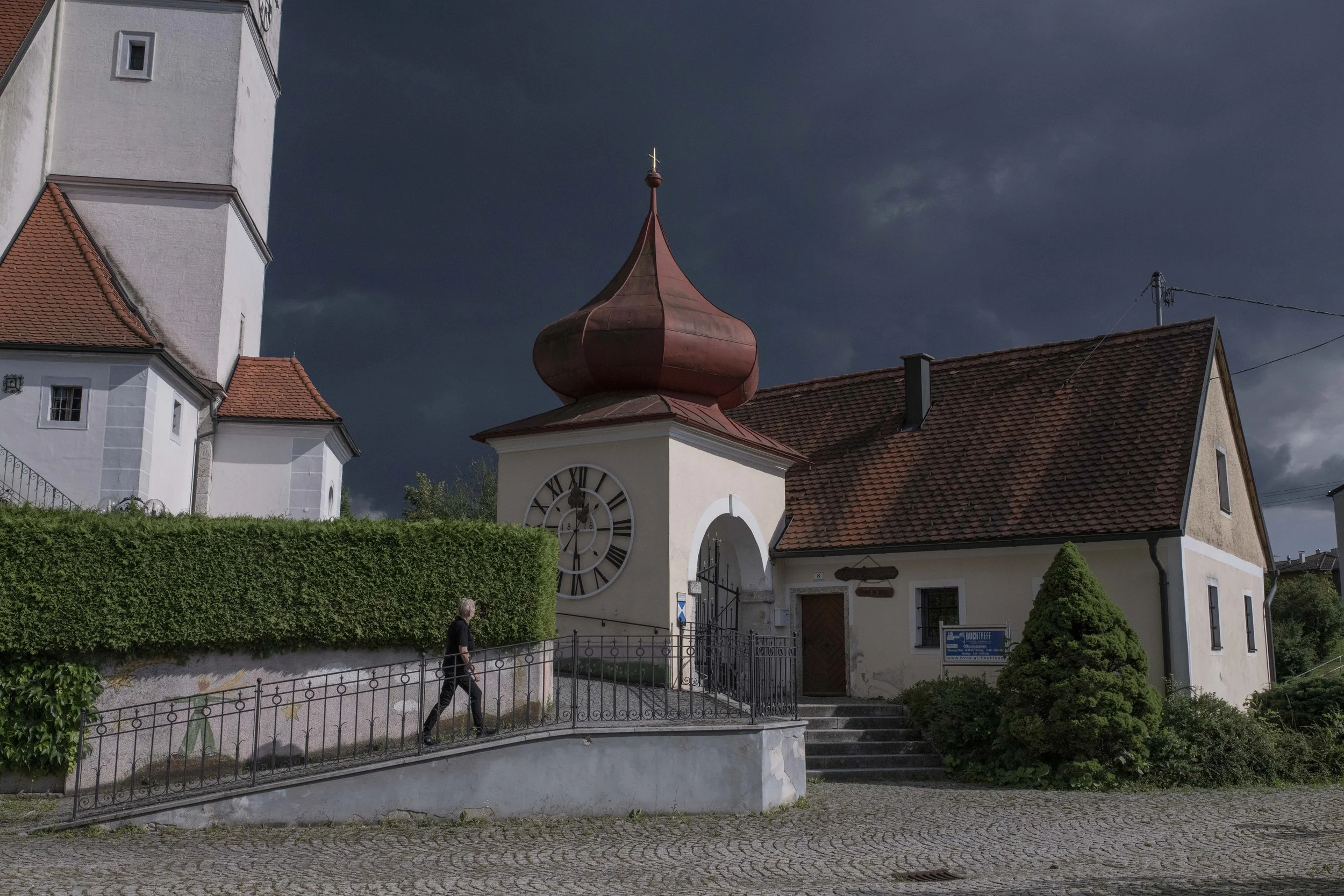
The bishop in a church near her hometown.
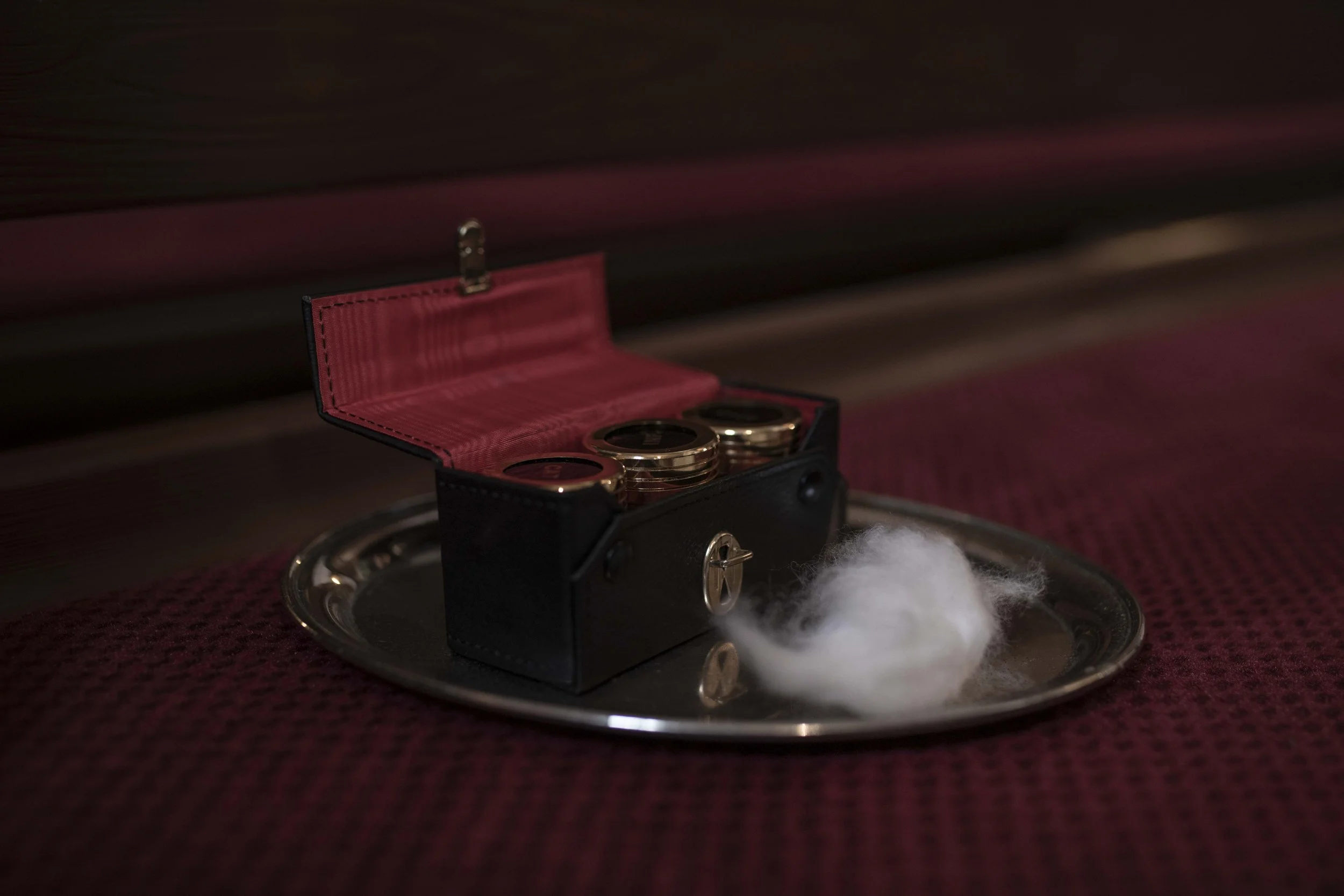
Oils that the bishop uses to anoint and baptize people.
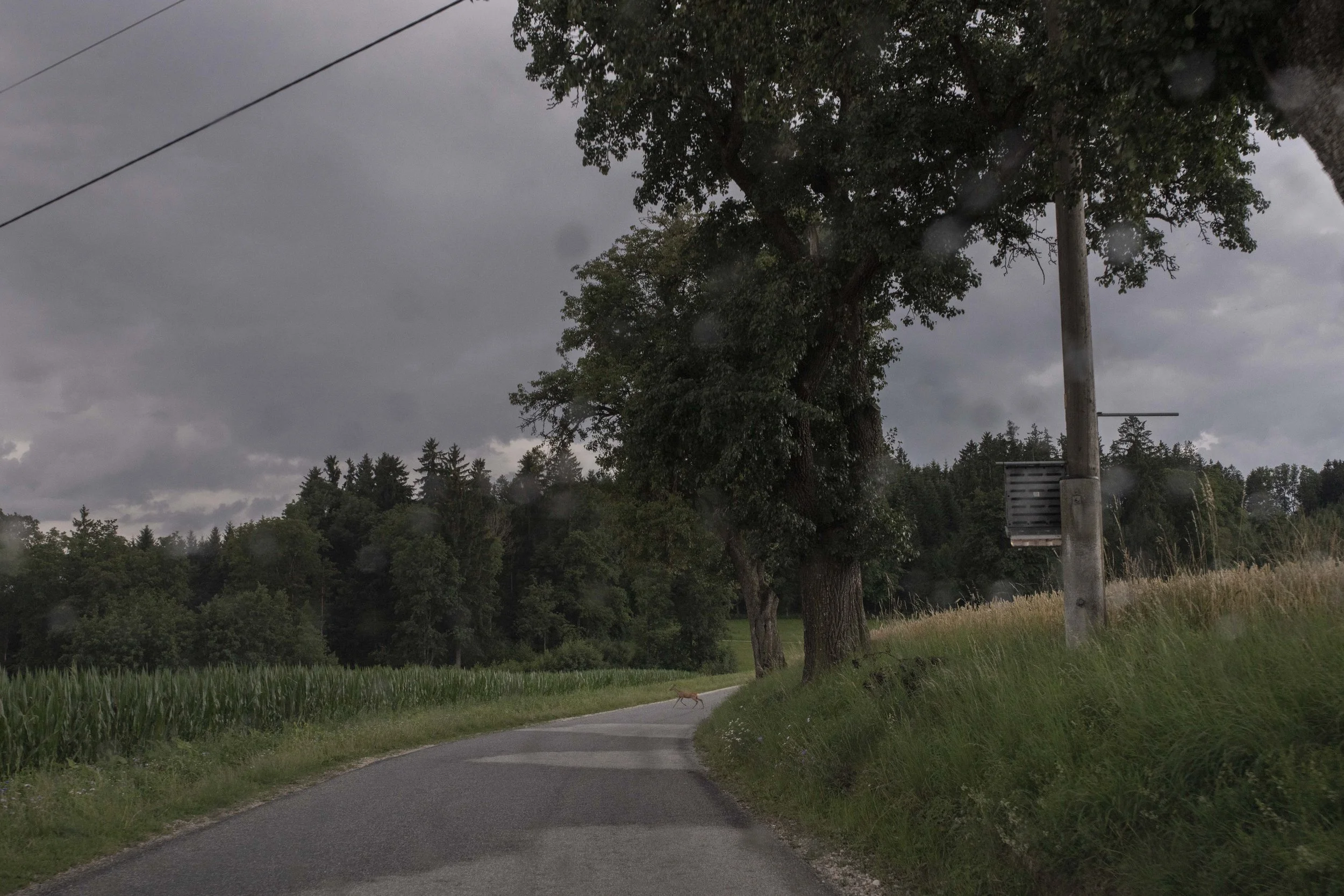
A fox in Almau, near Linz.
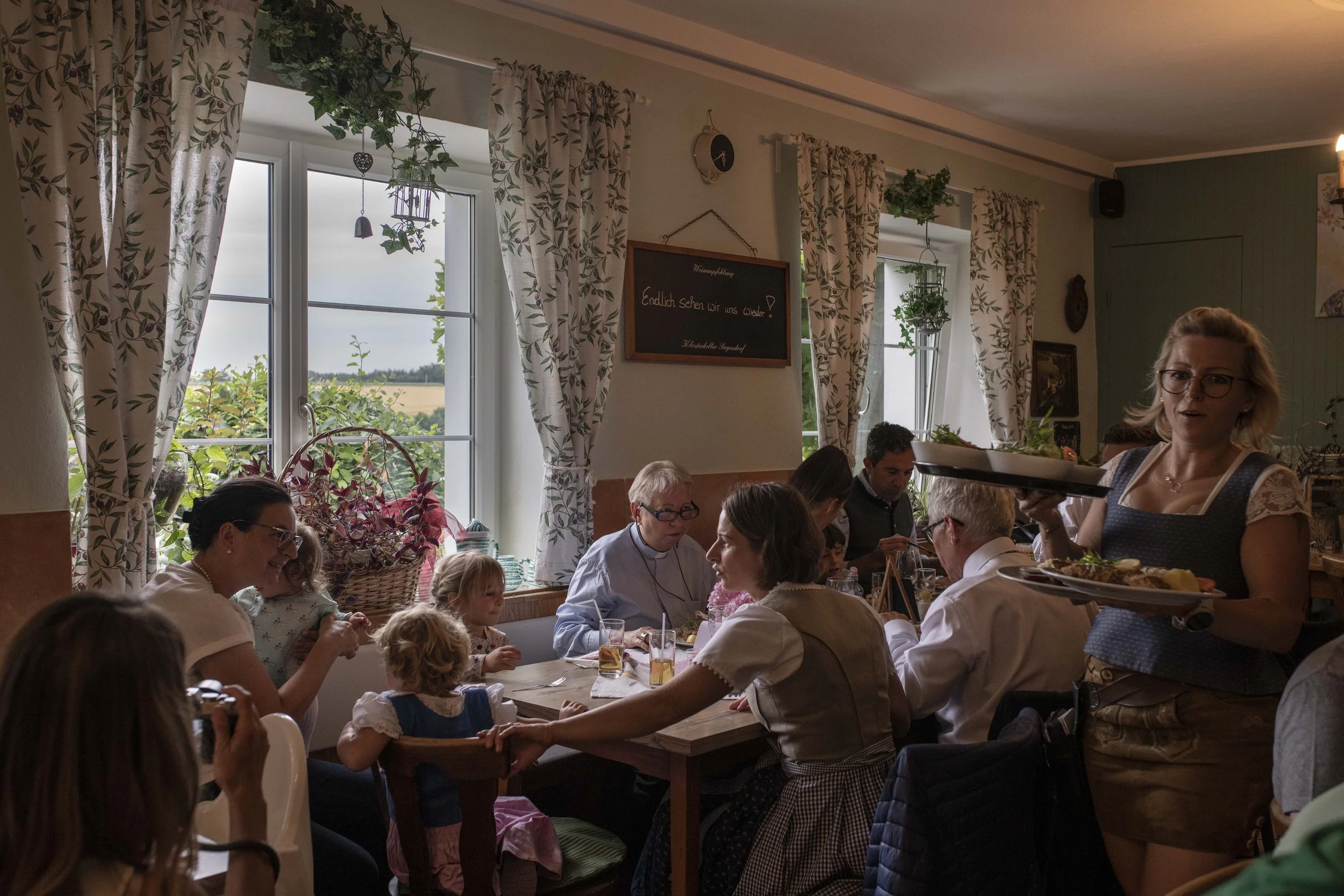
"We don't trust or support the Vatican church anymore. However, we are religious and spiritual, and we still want to have this experience". Marion Zehetner, the mother of the girl that has just been baptised.
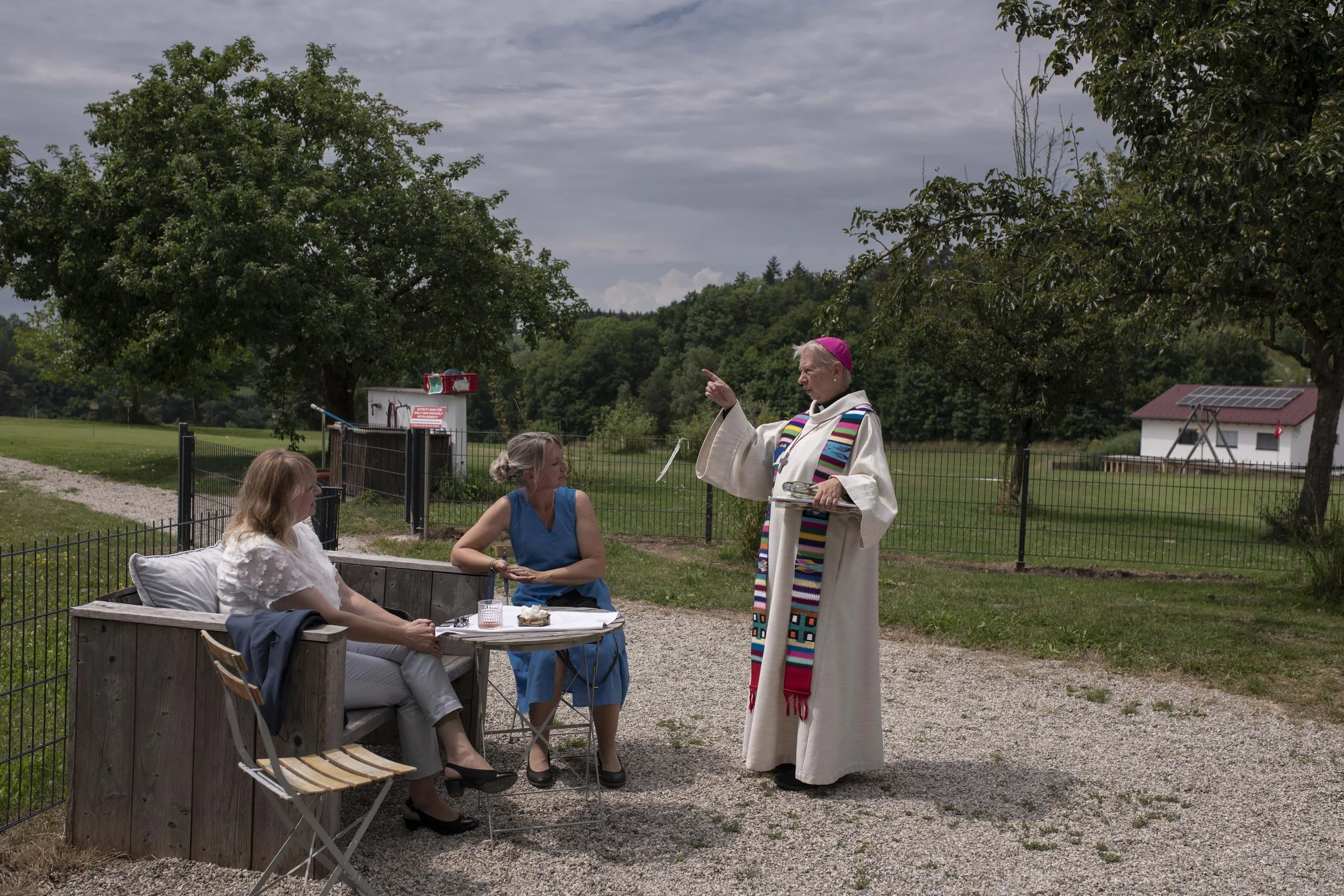
Mayr-Lumetzberger in Perg, Austria.
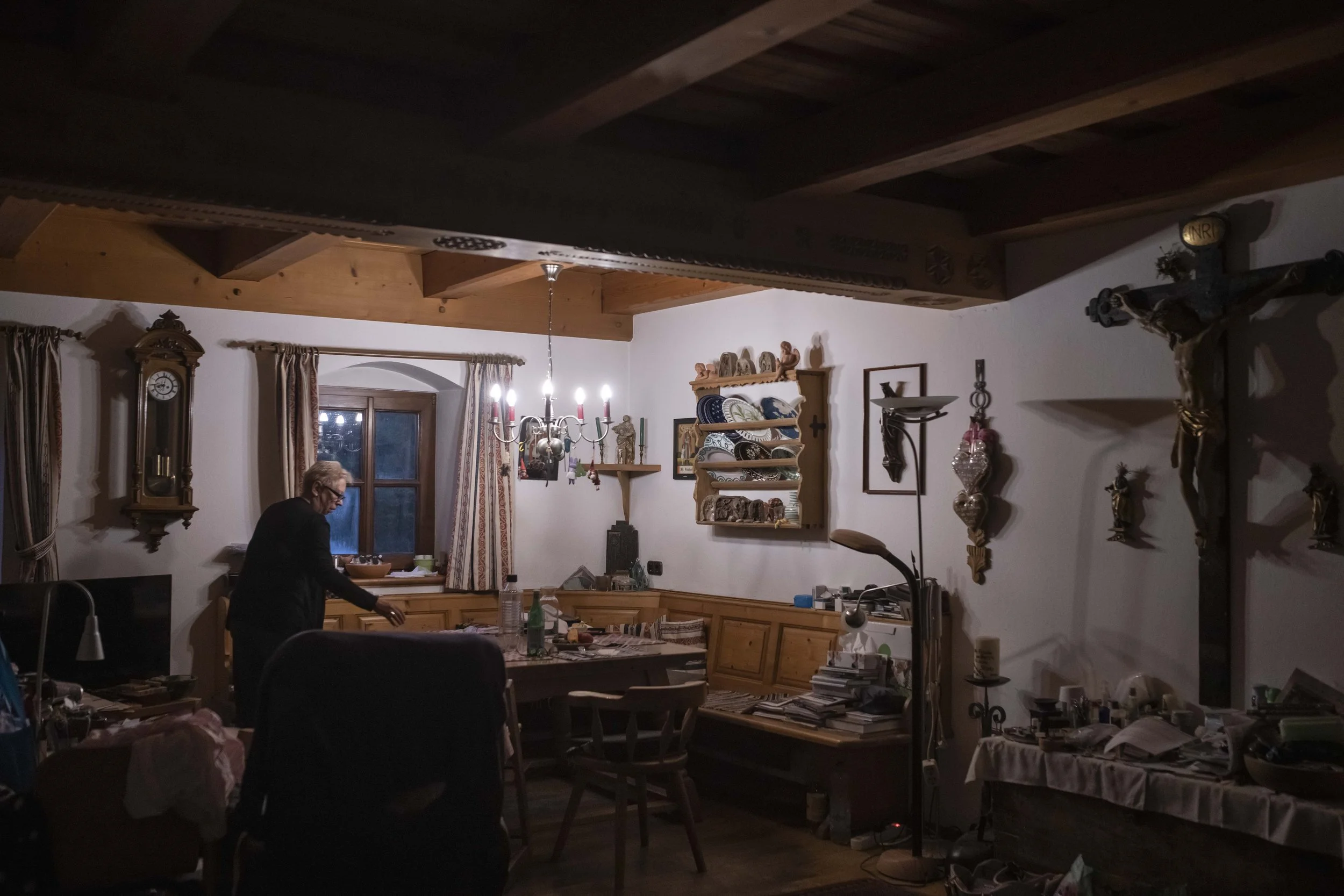
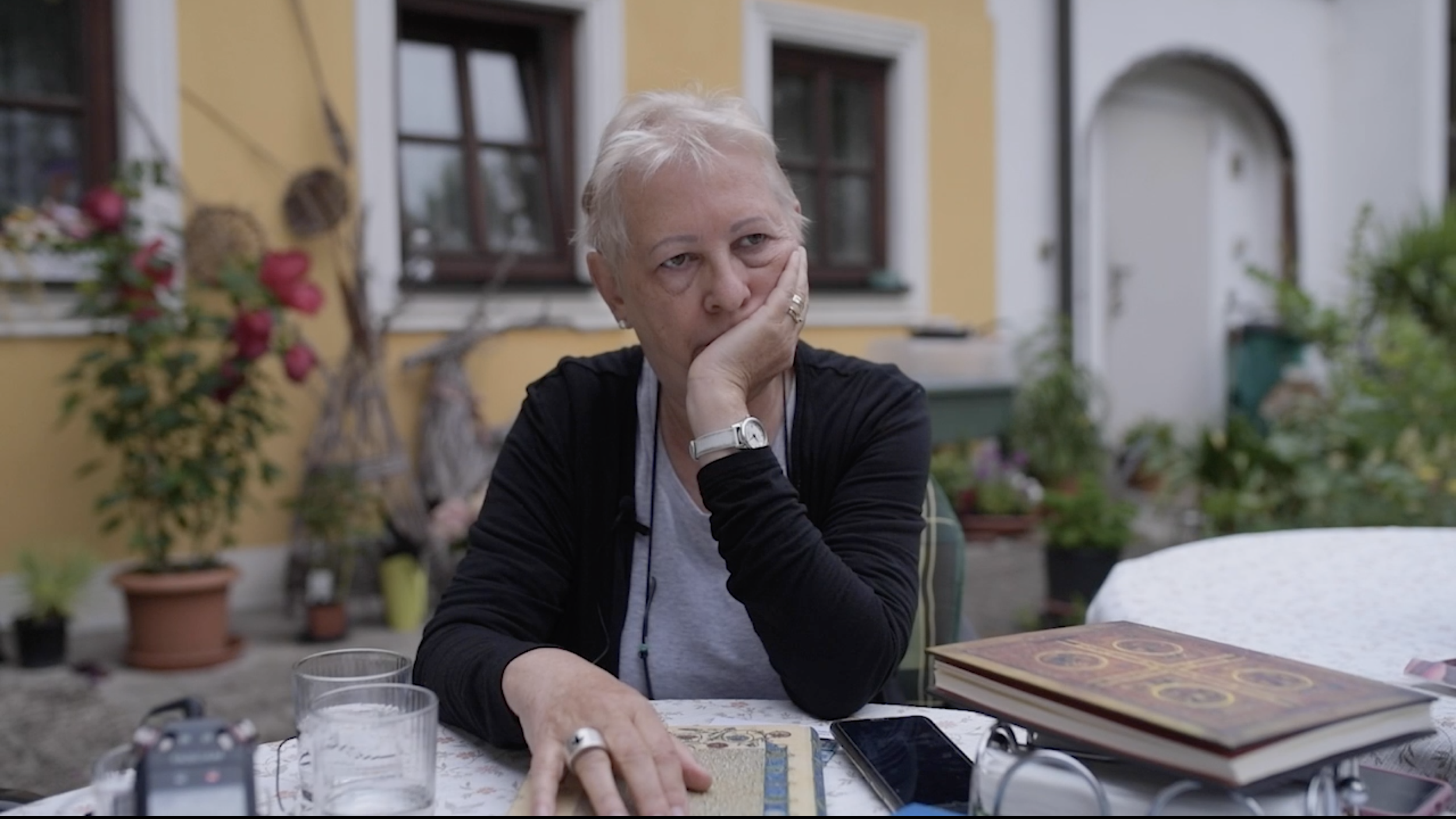
Christine Mayr-Lumetzberger in her home at dusk.
Mayr-Lumetzberger marrying Doris Schuetzenhofer and Gerhard Offenthaler in Karlingbergergut, Perg, Austria.
«According to the principle of civil law, no woman can hold a public office. According to the canon law, women are also prohibited from exercising any function or office of a spiritual order. Therefore, no woman can be ordained- If it were, this ordination would not have any sacramental character. […] No woman, no matter how holy she may be, can preach or teach. […] A woman is under the authority of her husband; the husband is not under the authority of his wife. The husband can punish her. A woman is obliged to follow her husband wherever he decides to take up residence. A woman has to show more modesty than a man»
Corpus Juris canonici, Abbé André, Droit Canon, vol. 2, col. 75, 1850
In the beginning, I was so surprised this existed, I can be who I am here. I am angry that the church doesn’t think about the future. People are leaving because they represent very old concepts. I don’t want to flee the catholic church, I want to fight for equality and diversity within it.
The bishop shows Tamara Cermak how to do a mass before she performs it by herself in Viena, Austria. Tamara Cermak is Queer, part of the LGTBI+ community, and catholic. She left the church where she was in because she felt she wasn’t being accepted or represented and is now part of the church where Christine Mayr-Lumetzberger sometimes attends and assists.
The church ended up being too far away from the people, we need to start actualizing it to the real needs and to the times we are living in. The church we need is open and diverse, includes women, and priests don't contemplate celibacy. Franz Zeiger is a priest from St.Peter's church, in Linz, and a supporter of the movement of the Women Priests. The movement received many male supporters within the church that are helping them.